
Heard On Sunday - The Hope of a Savior
The Light That Pierces Our Darkness
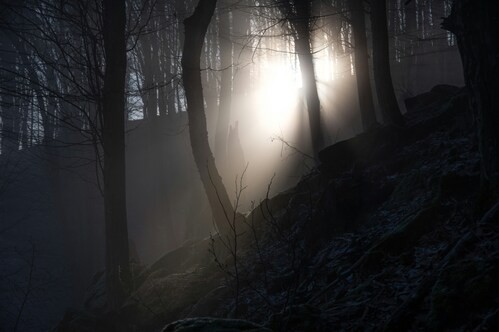
There's something profoundly beautiful about the way God orchestrates His most significant moments. When He chose to announce the birth of the Savior, He didn't select a grand palace or a daylight ceremony with maximum visibility. Instead, He waited for darkness—literal, physical darkness—and then flooded the world with light.
The shepherds were out in the fields by night, keeping watch over their flocks in the cold and dark. Then suddenly, the glory of the Lord shone around them. They were engulfed in brilliant, supernatural light. This wasn't coincidence. This was divine poetry.
Walking in Darkness
Seven hundred years before that miraculous night, the prophet Isaiah penned words that would echo through the centuries: "The people who walked in darkness have seen a great light; those who dwelt in a land of deep darkness, on them has light shined."
These weren't just poetic words. They were a promise. A prophecy. A declaration that something was fundamentally broken in the world, and Someone was coming to fix it.
The Apostle Paul later described humanity's condition with stark clarity: people are "darkened in their understanding, alienated from the life of God because of the ignorance that is in them, due to their hardness of heart." This isn't a popular message in our culture of self-help and positive thinking, but it's the truth we must confront.
Something is terribly wrong with us.
The Uncomfortable Truth
We live in a peculiar age where secular spiritualists can stand before millions and diagnose what's wrong with humanity, offering their insights and wisdom, and receive thunderous applause. Yet when someone opens the Bible and declares the same truth—that we are broken, that "no one is righteous, no not one"—people recoil in offense.
This is one of the clearest signs of spiritual blindness.
Look around. Natural disasters devastate communities. Relationships feel perpetually alienated. We struggle with self-esteem and identity. Evil appears everywhere, and disturbingly, many embrace it and call it good. This corruption has flowed into all people and institutions. We see it in the secular world. We even see it infiltrating Christianity itself.
We are profoundly restless and don't even know why. We find ourselves constantly chasing the next thing, never satisfied with where we are or what we have. There is no shalom, no peace, no satisfaction.
Here's an uncomfortable truth: no one has lied to you, deceived you, and betrayed you more than you have to yourself. We buy into the lie that we're in control, that we can stop destructive patterns whenever we want, that we would never cross certain lines. We convince ourselves that everything is under control.
But it's not.
The Need for a Different Kind of Savior
The world has always sought saviors. Military leaders. Political revolutionaries. Charismatic reformers. Throughout history, humanity has looked for someone to conquer, to lead, to fix things through power and force.
But the Savior prophesied in Isaiah 9 wasn't coming as a military conqueror. This wasn't going to be a mere man who appears, conquers, and leads with political power. This was going to be something far more profound—the never-ending, eternal God come to earth. God in the flesh. Immanuel.
"For to us a child is born, to us a son is given; and the government shall be upon his shoulder, and his name shall be called Wonderful Counselor, Mighty God, Everlasting Father, Prince of Peace."
The miracle wasn't just the birth itself. What made this birth miraculous was that Mary had never been with a man. Why does this matter? Because from the very beginning of sin in Genesis 3, our rebellion fractured our relationship with God. That fracture overflows into all of creation—into people, systems, relationships.
Reconciliation from such cosmic alienation cannot be built upon religious practice or rituals. It requires divine intervention.
The Savior's Identity
Matthew recognized the fulfillment of Isaiah's prophecy when he wrote about Jesus settling in Capernaum: "The land of Zebulun and the land of Naphtali, the way of the sea, beyond the Jordan, Galilee of the Gentiles—the people dwelling in darkness have seen a great light."
Jesus himself declared, "I am the light of the world. Whoever follows me will not walk in darkness, but will have the light of life."
Later, He stated even more clearly: "I have come into the world as light, so that whoever believes in me may not remain in darkness."
This child conceived of a virgin and born into our dark world, this son given as God himself stepping into human history—this Savior became our light. For those who believe, we are transferred out of the world of darkness into God's kingdom of light.
What This Savior Accomplishes
Isaiah's prophecy reveals what this Savior would do: multiply joy, break the yoke of burden, end oppression, bring peace. He would shine light into evil. Our sins would be atoned for once and for all. For those who have faith in Him, He would count us as righteous even though we're not.
This is powerfully encouraging because we are completely powerless to accomplish what God promised. We cannot transform hearts—not even our own, not fully. We cannot control the insidious aspects of our sin nature. We cannot bring lasting peace to our families, let alone the world.
Consider the last hundred years of world history. Massive military efforts. Strategic victories. Celebrations of peace. And yet, how long does peace ever last? For every advance humanity has made to bring the world closer together, we simply reveal our wickedness and sinful nature more quickly.
God has always known that we need a Savior who can usher in legitimate peace. There can be no long-term shalom without the transformation of hearts that leads to the transformation of communities and institutions.
Looking Forward
The Savior came once as a swaddled baby in a manger. But He's coming again—and not as a helpless infant. The second coming will be radically different. It will be a moment of justice and judgment for a world that has darkened everything, that has removed Christ from everything that bears His name.
This perspective changes everything. When we truly understand that Jesus will return, we find the strength to fight against sin. We find the motivation to live differently. We discover gratitude and hope that transcend our circumstances.
As we enter this season of celebration, the challenge is to step back regularly and ask: Where does Jesus fit into all this? If we can't answer that question, we've missed the meaning of the swaddled child in the cradle who came as our Savior.
The light has come into the darkness. And the darkness has not overcome it.
The shepherds were out in the fields by night, keeping watch over their flocks in the cold and dark. Then suddenly, the glory of the Lord shone around them. They were engulfed in brilliant, supernatural light. This wasn't coincidence. This was divine poetry.
Walking in Darkness
Seven hundred years before that miraculous night, the prophet Isaiah penned words that would echo through the centuries: "The people who walked in darkness have seen a great light; those who dwelt in a land of deep darkness, on them has light shined."
These weren't just poetic words. They were a promise. A prophecy. A declaration that something was fundamentally broken in the world, and Someone was coming to fix it.
The Apostle Paul later described humanity's condition with stark clarity: people are "darkened in their understanding, alienated from the life of God because of the ignorance that is in them, due to their hardness of heart." This isn't a popular message in our culture of self-help and positive thinking, but it's the truth we must confront.
Something is terribly wrong with us.
The Uncomfortable Truth
We live in a peculiar age where secular spiritualists can stand before millions and diagnose what's wrong with humanity, offering their insights and wisdom, and receive thunderous applause. Yet when someone opens the Bible and declares the same truth—that we are broken, that "no one is righteous, no not one"—people recoil in offense.
This is one of the clearest signs of spiritual blindness.
Look around. Natural disasters devastate communities. Relationships feel perpetually alienated. We struggle with self-esteem and identity. Evil appears everywhere, and disturbingly, many embrace it and call it good. This corruption has flowed into all people and institutions. We see it in the secular world. We even see it infiltrating Christianity itself.
We are profoundly restless and don't even know why. We find ourselves constantly chasing the next thing, never satisfied with where we are or what we have. There is no shalom, no peace, no satisfaction.
Here's an uncomfortable truth: no one has lied to you, deceived you, and betrayed you more than you have to yourself. We buy into the lie that we're in control, that we can stop destructive patterns whenever we want, that we would never cross certain lines. We convince ourselves that everything is under control.
But it's not.
The Need for a Different Kind of Savior
The world has always sought saviors. Military leaders. Political revolutionaries. Charismatic reformers. Throughout history, humanity has looked for someone to conquer, to lead, to fix things through power and force.
But the Savior prophesied in Isaiah 9 wasn't coming as a military conqueror. This wasn't going to be a mere man who appears, conquers, and leads with political power. This was going to be something far more profound—the never-ending, eternal God come to earth. God in the flesh. Immanuel.
"For to us a child is born, to us a son is given; and the government shall be upon his shoulder, and his name shall be called Wonderful Counselor, Mighty God, Everlasting Father, Prince of Peace."
The miracle wasn't just the birth itself. What made this birth miraculous was that Mary had never been with a man. Why does this matter? Because from the very beginning of sin in Genesis 3, our rebellion fractured our relationship with God. That fracture overflows into all of creation—into people, systems, relationships.
Reconciliation from such cosmic alienation cannot be built upon religious practice or rituals. It requires divine intervention.
The Savior's Identity
Matthew recognized the fulfillment of Isaiah's prophecy when he wrote about Jesus settling in Capernaum: "The land of Zebulun and the land of Naphtali, the way of the sea, beyond the Jordan, Galilee of the Gentiles—the people dwelling in darkness have seen a great light."
Jesus himself declared, "I am the light of the world. Whoever follows me will not walk in darkness, but will have the light of life."
Later, He stated even more clearly: "I have come into the world as light, so that whoever believes in me may not remain in darkness."
This child conceived of a virgin and born into our dark world, this son given as God himself stepping into human history—this Savior became our light. For those who believe, we are transferred out of the world of darkness into God's kingdom of light.
What This Savior Accomplishes
Isaiah's prophecy reveals what this Savior would do: multiply joy, break the yoke of burden, end oppression, bring peace. He would shine light into evil. Our sins would be atoned for once and for all. For those who have faith in Him, He would count us as righteous even though we're not.
This is powerfully encouraging because we are completely powerless to accomplish what God promised. We cannot transform hearts—not even our own, not fully. We cannot control the insidious aspects of our sin nature. We cannot bring lasting peace to our families, let alone the world.
Consider the last hundred years of world history. Massive military efforts. Strategic victories. Celebrations of peace. And yet, how long does peace ever last? For every advance humanity has made to bring the world closer together, we simply reveal our wickedness and sinful nature more quickly.
God has always known that we need a Savior who can usher in legitimate peace. There can be no long-term shalom without the transformation of hearts that leads to the transformation of communities and institutions.
Looking Forward
The Savior came once as a swaddled baby in a manger. But He's coming again—and not as a helpless infant. The second coming will be radically different. It will be a moment of justice and judgment for a world that has darkened everything, that has removed Christ from everything that bears His name.
This perspective changes everything. When we truly understand that Jesus will return, we find the strength to fight against sin. We find the motivation to live differently. We discover gratitude and hope that transcend our circumstances.
As we enter this season of celebration, the challenge is to step back regularly and ask: Where does Jesus fit into all this? If we can't answer that question, we've missed the meaning of the swaddled child in the cradle who came as our Savior.
The light has come into the darkness. And the darkness has not overcome it.
Recent
Message Takeaways - The Truth of the Resurrection
April 5th, 2026
Easter Sunday - Resurrection Day
April 5th, 2026
RHC In the News
April 3rd, 2026
Project Nehemiah - Elvis Has Left the Building
April 2nd, 2026
Heard On Sunday - The Perfect Lamb: Understanding Jesus’ Final Days Before the Cross
March 30th, 2026
Archive
2026
January
Solomon Thought About Life | Jan 4 | Lesson #3 | 12Let's Memorize the Books of the BibleSunday Focus – God Speaks from HeavenMessage Takeaways - God Speaks from HeavenHeard On Sunday - Unveiling Revelation: A Journey Through ScriptureBecause You Give - Thank you, from Alameda StudentsThe Queen of Sheba Visited Solomon | Jan 11 | Lesson #4 | 12Sunday Focus – A Vision of the Glorified ChristMessage Takeaways - A Vision of the Glorified ChristHeard On Sunday - A Vision of the Glorified ChristWisdom Of God's People | Jan 18 | Lesson #5 | 12Sunday Focus – Sanctity of LifeMessage Takeaways - Sanctity of LifeHeard On Sunday - Created in His Image: Understanding the Sanctity of LifeFamily Sunday | Jan 25Project Nehemiah - January 22nd UpdateSunday Focus – A Church That Doesn’t Love JesusMessage Takeaways - A Church That Doesn’t Love JesusHeard On Sunday - The Church That Lost Its First Love: A Journey Back to Passionate FaithA Kingdom Divided | Feb 1 | Lesson #1 | 13
February
Message Takeaways - Being Martyrs for JesusSunday Focus – Being Martyrs for JesusHeard On Sunday -The Blood of Martyrs: Finding Strength in SufferingIsrael's Evil Kings | Feb 8 | Lesson #2 | 13Message Takeaways - A Church That Compromises the TruthSunday Focus – A Church that Compromises the TruthHeard On Sunday -The Deadly Poison of Compromise: A Wake-Up Call for the Modern ChurchElijah Confronted Ahab | Feb 15 | Lesson #3 | 13Sunday Focus – The Jezebel ChurchMessage Takeaways - The Jezebel ChurchHeard On Sunday -The Danger of Tolerating Jezebel: A Call to Truth and HolinessProject Nehemiah - February 19, 2026 UpdateSunday Focus – An Autopsy of a Dead ChurchMessage Takeaways - An Autopsy of a Dead ChurchHeard On Sunday - The Autopsy of a Dead ChurchThe Reign of Ahab | March 1 | Lesson #4 | 13
March
Message Takeaways - A Church that Embraces the Great CommissionSunday Focus – A Church that Embraces the Great CommissionHeard On Sunday - The Power of Passion: Lessons from the Church in PhiladelphiaMessage Takeaways - A Church that Nauseates GodElisha the Prophet | March 8 | Lesson #1 | 14Jonah, Prophet to Ninevah | March 15 | Lesson #2 | 14A Vision of Flourishing | The FORGEHeard On Sunday - The Danger of Spiritual LukewarmnessOur King is Holy! The Holiness of GodHeard On Sunday - The Holiness of God: Understanding What It Means to Stand in Awe Empowering Families | The FORGEHosea, Prophet to Isreal | March 22 | Lesson #3 | 14Praise to the King of Creation!Message Takeaways - Praise to the King of CreationThe Throne Room of Heaven: A Glimpse Beyond the VeilFamily Sunday | March 29Real Community Insight | The FORGEProject Nehemiah - RHC Transition SchedulePalm SundayMessage Takeaways - The Lamb is InspectedEaster Family ResourcesHeard On Sunday - The Perfect Lamb: Understanding Jesus’ Final Days Before the Cross
2025
May
September
Sunday Focus - The House Hold of GodMessage Takeaways - The Household of GodSunday Focus – The Forge of a CovenantMessage Takeaway - Forging a CovenantHeard On Sunday - Forging of a CovenantSunday Focus – The Leadership of the BodyMessage Takeaways - The Leadership of the BodySunday Focus - Connection Through MembershipMessage Takeaways - Connection Through MembershipHeard On Sunday - Connection through MembershipSunday Focus – The Imparatives of the Chirstian Life
October
Three Kids BaptizedSaul Disobeyed God | Lesson #3 | Series 10Samuel Anointed David | Lesson #4 | Series 10Heard On Sunday - The Imperatives of the Christian Life Heard On Sunday - The Leadership of the BodyMessage Takeaway - The Imperatives of the Chirstian LifeDavid Played for Saul | Lesson #5 | Series 10Heard On Sunday - The Bond of Life GroupsMessage Takeaways - The Bond of Life Groups and Table FellowshipSunday Focus - The Good Shepherd's LoveBecause You Give - Alternatives Pregnancy CenterTitle | Lesson # | SeriesMessage Takeaways - The Good Shepherd's LoveMessage Takeaways - Reaching The LostHeard On Sunday - Reaching the LostBecause You Give - Open DoorsSunday Focus - Who is Your One Life?