
Heard On Sunday - The Church That Lost Its First Love: A Journey Back to Passionate Faith
The Church That Lost Its First Love: A Journey Back to Passionate Faith
(6 minute read)
In the ancient city of Ephesus, a remarkable congregation once thrived. By all outward appearances, this church was exemplary—doctrinally sound, morally pure, and tireless in their work for the kingdom. They refused to tolerate false teachers, they tested those who claimed apostolic authority, and they stood firm against cultural pressures that would have compromised their faith (Revelation 2:2-3, 6). Yet despite all these commendable qualities, they received a sobering message: "I have this against you, that you have abandoned the love you had at first" (Revelation 2:4).
This paradox presents one of the most haunting possibilities for any community of faith—the danger of doing all the right things for all the wrong reasons.
The Peril of Passion Lost
Imagine a marriage where one spouse looks at the other and says, "I don't love you anymore." The words cut deep, not because they signal a sudden catastrophe, but because they reveal what has been slowly eroding over time. Love rarely disappears in a moment; it fades gradually, imperceptibly, until one day you wake up and realize the fire has gone out.
The Ephesian church found themselves in precisely this spiritual condition. They had inherited an incredible legacy—founded and nurtured by the apostle Paul (Acts 19), strengthened by Timothy (1 Timothy 1:3), and guided by John himself. These spiritual giants had poured into this congregation, establishing them in truth and equipping them for ministry. Yet somewhere along the journey from the first generation to the third, something essential had been lost.
They still performed their religious duties. They still maintained doctrinal purity. They still resisted evil and exposed false teaching. But the passionate devotion that once characterized their faith had cooled into cold orthodoxy. They had become spiritual technicians rather than devoted lovers of Christ.
The Difference Between Legalism and Love
There exists a profound difference between two approaches to faith: "I obey so Jesus accepts me" versus "Jesus accepts me, so I gladly obey" (Galatians 3:3). The former is the path of legalism—an exhausting treadmill of religious performance aimed at earning divine favor. The latter is the response of gratitude—joyful obedience flowing from the security of already being loved and accepted (1 John 4:19).
The Ephesians had drifted toward the former. They had become what we might call "do-nothing pietists"—people who do all the right things but have lost the heart connection that makes those actions meaningful. They were in danger of becoming like the Pharisees Jesus criticized—externally righteous but internally cold (Matthew 23:27).
This is why good theology matters so deeply. Good theology transforms lives; bad theology wrecks them (1 Timothy 4:16). The Ephesians had excellent theology, but they had somehow separated head knowledge from heart devotion. They had become all doctrine and no affection, all orthodoxy and no passion.
The Divine Diagnosis
The One who walks among the lampstands, who holds the stars in His right hand, sees everything. His eyes are like flames of fire, penetrating through external appearances to examine the heart (Revelation 1:13-14, 16, 20). And what He saw in Ephesus grieved Him.
"I know your works, your toil, and your patient endurance," He acknowledged (Revelation 2:2-3). The commendation was genuine—they were doing much that was praiseworthy. They had endured persecution, economic hardship, and social ostracism rather than compromise their convictions. They had remained faithful through trials that would have broken lesser communities.
But then came the devastating words: "I have this against you" (Revelation 2:4).
The diagnosis was clear: they had forsaken their first love. That initial enthusiasm, that cage-stage passion, that overwhelming joy of salvation—it had waned. They could no longer sing "every day with Jesus is sweeter than the day before" because it simply wasn't true anymore. They were going through the motions, and Christ knew it.
The Threefold Remedy
Remarkably, the diagnosis came with a prescription. The condition was critical but not hopeless. Three steps would lead them back to spiritual vitality:
Remember. Go back to where you first fell in love. Recall the moment when grace broke through and everything changed. Remember when knowing Christ was the only thing that mattered, when His love overwhelmed every other concern (Revelation 2:5).
Repent. Undergo a genuine change of heart and mind. Confess the sin of spiritual indifference. Acknowledge the religious moralism that has replaced genuine devotion. Feel contrition not just intellectually but emotionally. And then—this is crucial—actually change. Repentance without transformation isn't really repentance at all (Matthew 3:8, Acts 3:19).
Return. Do the works you did at first, but do them with the right heart. Go back to that place where you first understood you were loved not because you deserved it but simply because of grace (Revelation 2:5). Return to the foot of the cross where love was first kindled.
For most believers, the place where we first fell in love with Jesus is at the cross—that place where we understood the depth of our sin and the greater depth of His love. Returning to first love means returning again and again to Calvary, allowing the reality of what happened there to overwhelm us with gratitude.
The Promise to Overcomers
The message concludes with a magnificent promise: "To the one who conquers, I will grant to eat of the tree of life, which is in the paradise of God" (Revelation 2:7).
This promise connects the beginning of Scripture with its end, linking Genesis with Revelation. What Adam and Eve forfeited through disobedience (Genesis 3:22-24), Christ has regained through His victory (1 Corinthians 15:22, 45). The tree of life, barred to humanity after the fall, becomes accessible again through the second Adam who succeeded where the first Adam failed.
Paradise isn't just a future hope—it begins now. Yes, we live in a fallen world, but those who belong to Christ experience an aroma of heaven even in the present (Philippians 1:21-23). The abundant life Jesus promised starts the moment we surrender to Him, not at some distant future point (John 10:10).
The victory is assured for those who persevere, who remain determined in their faith, who refuse to let their love grow cold. Nothing can separate us from the love of Christ when we remain connected to Him (Romans 8:35-39). We are more than conquerors—super-conquerors—through Him who loved us.
A Mirror for Today
The Ephesian church serves as a mirror for every generation of believers. How easy it is to substitute activity for affection, to replace passion with performance, to maintain external righteousness while losing internal devotion.
Consider these diagnostic questions: What occupies your thoughts? What dominates your conversations? What genuinely excites you? Where does your money go? The answers reveal what you truly love (Matthew 6:21).
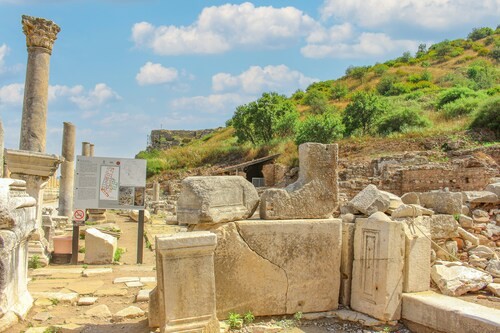
The warning is sobering: a church that loses its first love will eventually lose its lampstand (Revelation 2:5). It will cease to shine as a beacon in the darkness. The ruins of ancient Ephesus stand as a silent testimony to this reality.
But the invitation remains open: Return. Remember. Repent. Rekindle the flame. The One who walks among the churches still calls His people back to passionate, wholehearted devotion.
After all, He wants not just our obedience but our affection. He desires not just our service but our hearts. And the promise stands: those who return to first love will feast forever at the tree of life in the paradise of God (Revelation 2:7).
The question is simply this: Will you accept the invitation?
In the ancient city of Ephesus, a remarkable congregation once thrived. By all outward appearances, this church was exemplary—doctrinally sound, morally pure, and tireless in their work for the kingdom. They refused to tolerate false teachers, they tested those who claimed apostolic authority, and they stood firm against cultural pressures that would have compromised their faith (Revelation 2:2-3, 6). Yet despite all these commendable qualities, they received a sobering message: "I have this against you, that you have abandoned the love you had at first" (Revelation 2:4).
This paradox presents one of the most haunting possibilities for any community of faith—the danger of doing all the right things for all the wrong reasons.
The Peril of Passion Lost
Imagine a marriage where one spouse looks at the other and says, "I don't love you anymore." The words cut deep, not because they signal a sudden catastrophe, but because they reveal what has been slowly eroding over time. Love rarely disappears in a moment; it fades gradually, imperceptibly, until one day you wake up and realize the fire has gone out.
The Ephesian church found themselves in precisely this spiritual condition. They had inherited an incredible legacy—founded and nurtured by the apostle Paul (Acts 19), strengthened by Timothy (1 Timothy 1:3), and guided by John himself. These spiritual giants had poured into this congregation, establishing them in truth and equipping them for ministry. Yet somewhere along the journey from the first generation to the third, something essential had been lost.
They still performed their religious duties. They still maintained doctrinal purity. They still resisted evil and exposed false teaching. But the passionate devotion that once characterized their faith had cooled into cold orthodoxy. They had become spiritual technicians rather than devoted lovers of Christ.
The Difference Between Legalism and Love
There exists a profound difference between two approaches to faith: "I obey so Jesus accepts me" versus "Jesus accepts me, so I gladly obey" (Galatians 3:3). The former is the path of legalism—an exhausting treadmill of religious performance aimed at earning divine favor. The latter is the response of gratitude—joyful obedience flowing from the security of already being loved and accepted (1 John 4:19).
The Ephesians had drifted toward the former. They had become what we might call "do-nothing pietists"—people who do all the right things but have lost the heart connection that makes those actions meaningful. They were in danger of becoming like the Pharisees Jesus criticized—externally righteous but internally cold (Matthew 23:27).
This is why good theology matters so deeply. Good theology transforms lives; bad theology wrecks them (1 Timothy 4:16). The Ephesians had excellent theology, but they had somehow separated head knowledge from heart devotion. They had become all doctrine and no affection, all orthodoxy and no passion.
The Divine Diagnosis
The One who walks among the lampstands, who holds the stars in His right hand, sees everything. His eyes are like flames of fire, penetrating through external appearances to examine the heart (Revelation 1:13-14, 16, 20). And what He saw in Ephesus grieved Him.
"I know your works, your toil, and your patient endurance," He acknowledged (Revelation 2:2-3). The commendation was genuine—they were doing much that was praiseworthy. They had endured persecution, economic hardship, and social ostracism rather than compromise their convictions. They had remained faithful through trials that would have broken lesser communities.
But then came the devastating words: "I have this against you" (Revelation 2:4).
The diagnosis was clear: they had forsaken their first love. That initial enthusiasm, that cage-stage passion, that overwhelming joy of salvation—it had waned. They could no longer sing "every day with Jesus is sweeter than the day before" because it simply wasn't true anymore. They were going through the motions, and Christ knew it.
The Threefold Remedy
Remarkably, the diagnosis came with a prescription. The condition was critical but not hopeless. Three steps would lead them back to spiritual vitality:
Remember. Go back to where you first fell in love. Recall the moment when grace broke through and everything changed. Remember when knowing Christ was the only thing that mattered, when His love overwhelmed every other concern (Revelation 2:5).
Repent. Undergo a genuine change of heart and mind. Confess the sin of spiritual indifference. Acknowledge the religious moralism that has replaced genuine devotion. Feel contrition not just intellectually but emotionally. And then—this is crucial—actually change. Repentance without transformation isn't really repentance at all (Matthew 3:8, Acts 3:19).
Return. Do the works you did at first, but do them with the right heart. Go back to that place where you first understood you were loved not because you deserved it but simply because of grace (Revelation 2:5). Return to the foot of the cross where love was first kindled.
For most believers, the place where we first fell in love with Jesus is at the cross—that place where we understood the depth of our sin and the greater depth of His love. Returning to first love means returning again and again to Calvary, allowing the reality of what happened there to overwhelm us with gratitude.
The Promise to Overcomers
The message concludes with a magnificent promise: "To the one who conquers, I will grant to eat of the tree of life, which is in the paradise of God" (Revelation 2:7).
This promise connects the beginning of Scripture with its end, linking Genesis with Revelation. What Adam and Eve forfeited through disobedience (Genesis 3:22-24), Christ has regained through His victory (1 Corinthians 15:22, 45). The tree of life, barred to humanity after the fall, becomes accessible again through the second Adam who succeeded where the first Adam failed.
Paradise isn't just a future hope—it begins now. Yes, we live in a fallen world, but those who belong to Christ experience an aroma of heaven even in the present (Philippians 1:21-23). The abundant life Jesus promised starts the moment we surrender to Him, not at some distant future point (John 10:10).
The victory is assured for those who persevere, who remain determined in their faith, who refuse to let their love grow cold. Nothing can separate us from the love of Christ when we remain connected to Him (Romans 8:35-39). We are more than conquerors—super-conquerors—through Him who loved us.
A Mirror for Today
The Ephesian church serves as a mirror for every generation of believers. How easy it is to substitute activity for affection, to replace passion with performance, to maintain external righteousness while losing internal devotion.
Consider these diagnostic questions: What occupies your thoughts? What dominates your conversations? What genuinely excites you? Where does your money go? The answers reveal what you truly love (Matthew 6:21).
The warning is sobering: a church that loses its first love will eventually lose its lampstand (Revelation 2:5). It will cease to shine as a beacon in the darkness. The ruins of ancient Ephesus stand as a silent testimony to this reality.
But the invitation remains open: Return. Remember. Repent. Rekindle the flame. The One who walks among the churches still calls His people back to passionate, wholehearted devotion.
After all, He wants not just our obedience but our affection. He desires not just our service but our hearts. And the promise stands: those who return to first love will feast forever at the tree of life in the paradise of God (Revelation 2:7).
The question is simply this: Will you accept the invitation?
Recent
Archive
2026
January
Solomon Thought About Life | Jan 4 | Lesson #3 | 12Let's Memorize the Books of the BibleSunday Focus – God Speaks from HeavenMessage Takeaways - God Speaks from HeavenHeard On Sunday - Unveiling Revelation: A Journey Through ScriptureBecause You Give - Thank you, from Alameda StudentsThe Queen of Sheba Visited Solomon | Jan 11 | Lesson #4 | 12Sunday Focus – A Vision of the Glorified ChristMessage Takeaways - A Vision of the Glorified ChristHeard On Sunday - A Vision of the Glorified ChristWisdom Of God's People | Jan 18 | Lesson #5 | 12Message Takeaways - Sanctity of LifeSunday Focus – Sanctity of LifeHeard On Sunday - Created in His Image: Understanding the Sanctity of LifeFamily Sunday | Jan 25Project Nehemiah - January 22nd UpdateMessage Takeaways - A Church That Doesn’t Love JesusSunday Focus – A Church That Doesn’t Love JesusHeard On Sunday - The Church That Lost Its First Love: A Journey Back to Passionate FaithA Kingdom Divided | Feb 1 | Lesson #1 | 13
February
Sunday Focus – Being Martyrs for JesusMessage Takeaways - Being Martyrs for JesusHeard On Sunday -The Blood of Martyrs: Finding Strength in SufferingIsrael's Evil Kings | Feb 8 | Lesson #2 | 13Sunday Focus – A Church that Compromises the TruthMessage Takeaways - A Church That Compromises the TruthHeard On Sunday -The Deadly Poison of Compromise: A Wake-Up Call for the Modern ChurchElijah Confronted Ahab | Feb 15 | Lesson #3 | 13Sunday Focus – The Jezebel ChurchMessage Takeaways - The Jezebel ChurchHeard On Sunday -The Danger of Tolerating Jezebel: A Call to Truth and HolinessProject Nehemiah - February 19, 2026 UpdateMessage Takeaways - An Autopsy of a Dead ChurchSunday Focus – An Autopsy of a Dead ChurchHeard On Sunday - The Autopsy of a Dead ChurchThe Reign of Ahab | March 1 | Lesson #4 | 13
March
Sunday Focus – A Church that Embraces the Great CommissionMessage Takeaways - A Church that Embraces the Great CommissionHeard On Sunday - The Power of Passion: Lessons from the Church in PhiladelphiaMessage Takeaways - A Church that Nauseates GodElisha the Prophet | March 8 | Lesson #1 | 14Jonah, Prophet to Ninevah | March 15 | Lesson #2 | 14A Vision of Flourishing | The FORGEHeard On Sunday - The Danger of Spiritual LukewarmnessHeard On Sunday - The Holiness of God: Understanding What It Means to Stand in Awe The Holiness of GodOur King is Holy! Empowering Families | The FORGEHosea, Prophet to Isreal | March 22 | Lesson #3 | 14Message Takeaways - Praise to the King of CreationThe Throne Room of Heaven: A Glimpse Beyond the VeilPraise to the King of Creation!Family Sunday | March 29Real Community Insight | The FORGEProject Nehemiah - RHC Transition SchedulePalm SundayMessage Takeaways - The Lamb is InspectedHeard On Sunday - The Perfect Lamb: Understanding Jesus’ Final Days Before the CrossEaster Family Resources
April
Project Nehemiah - Elvis Has Left the Building RHC In the NewsEaster Sunday - Resurrection DayMessage Takeaways - The Truth of the ResurrectionHeard On Sunday -The Unfiltered Power of the Risen ChristA Powerful and Practical Partnership | The FORGEThe Northern Kingdom Was Destroyed | April 12 Message Takeaways - The Lion, the Lamb, and the WorldEaster Sunday - The Lion, the Lamb, and the WorldProject Nehemiah - Thankful for the past and looking toward the future!Heard On Sunday - The Whole World in His HandsFamily Sunday & Open House | April 19Message Takeaways - When God Moves You!First Day at the New RHC - When God Moves YouHeard On Sunday - When God Moves YouFamily Sunday | April 26The Four Horsemen of the ApocalypseMessage Takeaways - Faith Endures in a World Under JudgmentWe need your input - Community Survey | The FORGE Heard On Sunday -The Four Horsemen: Understanding God's Sovereignty in a Broken World
May
Judah's Good Kings | May 3Message Takeaways - The Wrath of the Lamb — Standing Before the Sovereign JudgeThe Wrath of the LambAlpha & Omega Outfitters Sneak Peak | The FORGEProphets to Judah | May 10Heard On Sunday - The Wrath of the Lamb: Understanding the Fullness of JesusMessage Takeaways - The Lamb Shepherds the Nations The Lamb Shepherds the NationsThe Seal of the Living God: Finding Security in an Uncertain WorldGod Promised a New Covenant | May 17Message Takeaways - The Praise of His GloryThe Praise of His GloryStop Chasing Purpose — You Already Have OneCheck Us Out On Social | The FORGEJudah Was Taken Captive | May 24The Antichrist of LegalismThe Antichrist of LegalismThe Antichrist of LegalismOn-Site Counseling Partner | The FORGEFamily Sunday | May 31Prayers Above and Judgment Below